
Materials and Finishes for Dubai Homes, and How to Look After Them
How marble, porcelain, timber, joinery finishes, paint, fabrics, brass and glass cope with Dubai heat, humidity, sun and AC, and how to care for each one.
Projects from AED 150,000
Guide: materials and finishes
A finish that looks right on a sample board has to keep looking right for years in a Dubai home. Here that means strong sun through large windows, sand carried in on shoes and on the wind, humidity that climbs near the coast in summer, and air conditioning that runs for most of the year and dries the air indoors. Every material answers those conditions in its own way.
This guide sets out what we weigh when we specify stone, tiles, timber, joinery, paint, fabrics, metals and glass for villas and apartments in Dubai: where each one performs well, where it struggles, and what it needs from you once you move in. It is general guidance. On a real project every choice is checked against the room, the way it is used and physical samples seen in your own light.
Materials covered in this guide
- Marble, travertine, granite and quartz
- Porcelain and large-format tiles
- Solid and engineered timber floors
- Joinery boards, veneer, lacquer and laminate
- Paints for cooled, humid interiors
- Fabrics, leather and sun fade
- Brass and other metal finishes
- Glass for showers, balustrades and windows
What the Dubai climate asks of a finish
Four conditions shape almost every specification decision we make here. Sunlight is strong all year and pours through the wide glazing of modern villas and towers, bleaching fabrics, timber and some resins. Fine sand and dust behave like an abrasive underfoot, dulling polished surfaces at entrances and on terraces.
Outdoor humidity can run high in summer, particularly close to the sea, while the air inside a cooled home is cool and dry. Materials that take up and release moisture, timber above all, move as they pass between those two states. When a home is closed up with the cooling switched off during a summer trip, warm damp air meets cold surfaces and condenses, and that is where mould and swelling begin.
None of this rules a material out. It means each one has to be chosen, detailed and cared for with these conditions in mind.
Natural and engineered stone
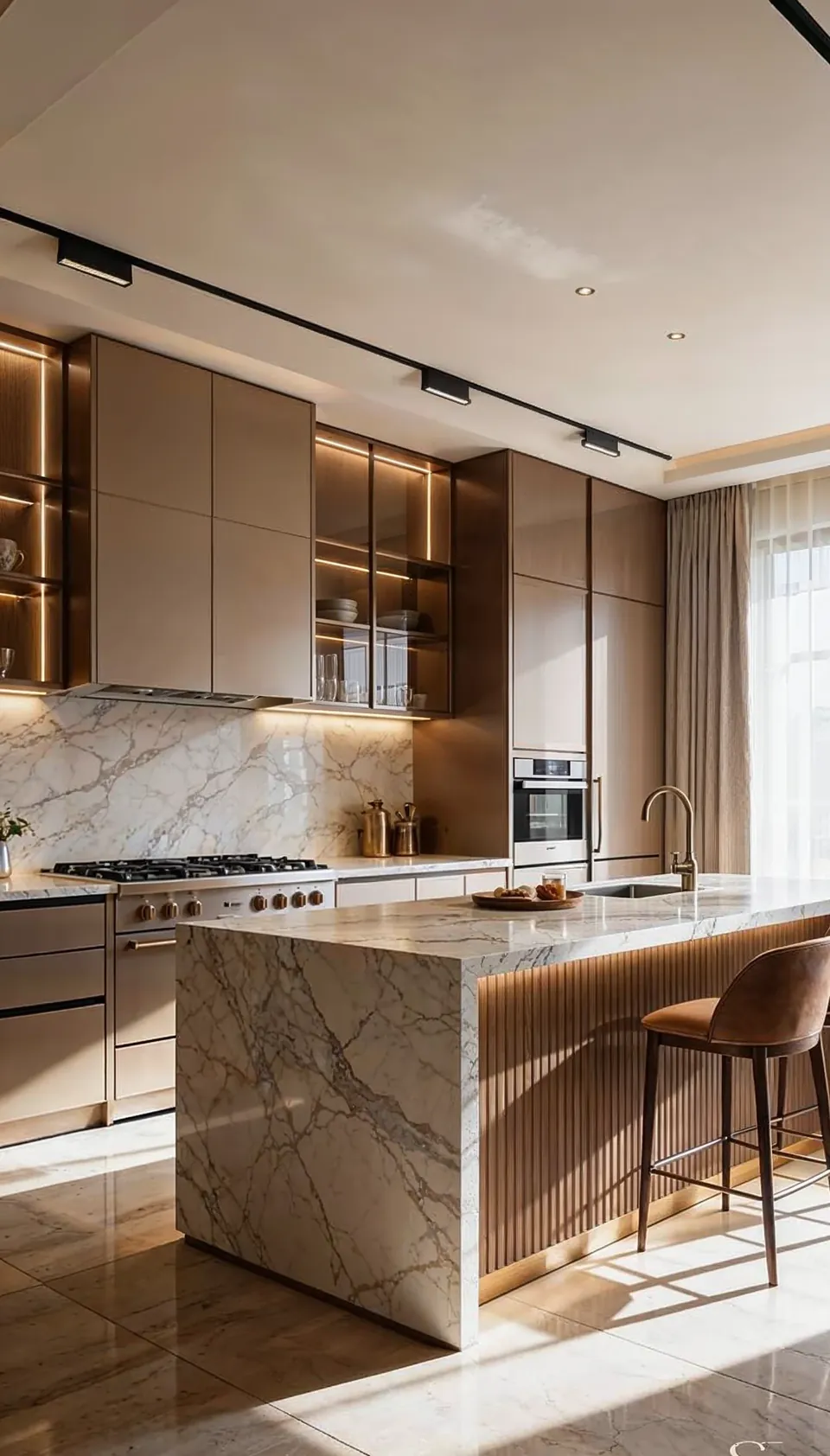
Stone is the material Dubai owners ask us about most, and the four types we specify most often behave very differently. In a kitchen we weigh them against how you cook and entertain, which our kitchen design page covers alongside the rest of the room.
- Marble
- Polished or honed, for floors, walls, vanities and islands
- Marble is mostly calcite, so acids such as lemon juice, vinegar, some cleaning products and certain cosmetics etch its surface, leaving dull marks that show most on a polished finish. It is porous and needs a penetrating sealer, renewed from time to time. Honed marble disguises etching better, while polished marble reflects more light and shows every mark. Clean it with a pH-neutral stone cleaner and wipe spills promptly.
- Travertine
- A warm, textured limestone for floors, walls and terraces
- Travertine forms with natural holes, which are usually filled for interior floors and walls and may be left open or tumbled outside. Like marble it reacts to acids and should be sealed. Pale travertine stays comparatively comfortable underfoot in the sun, one reason it suits terraces and pool surrounds, provided the finish offers enough grip when wet.
- Granite
- Dense, hard and forgiving
- Granite is far less sensitive to acids and scratches than marble and copes well with heat, which makes it a practical choice for busy family kitchens and outdoor kitchens. Some paler granites absorb more than they appear to, so we test and seal them where needed.
- Quartz
- Engineered stone bound with resin
- Quartz surfaces are non-porous, need no sealing and resist kitchen stains well. The resin that binds them can be marked by hot pans and can discolour under strong sunlight, so we keep quartz indoors, away from large sunny windows, and suggest trivets beside the hob.
Porcelain and large-format tiles
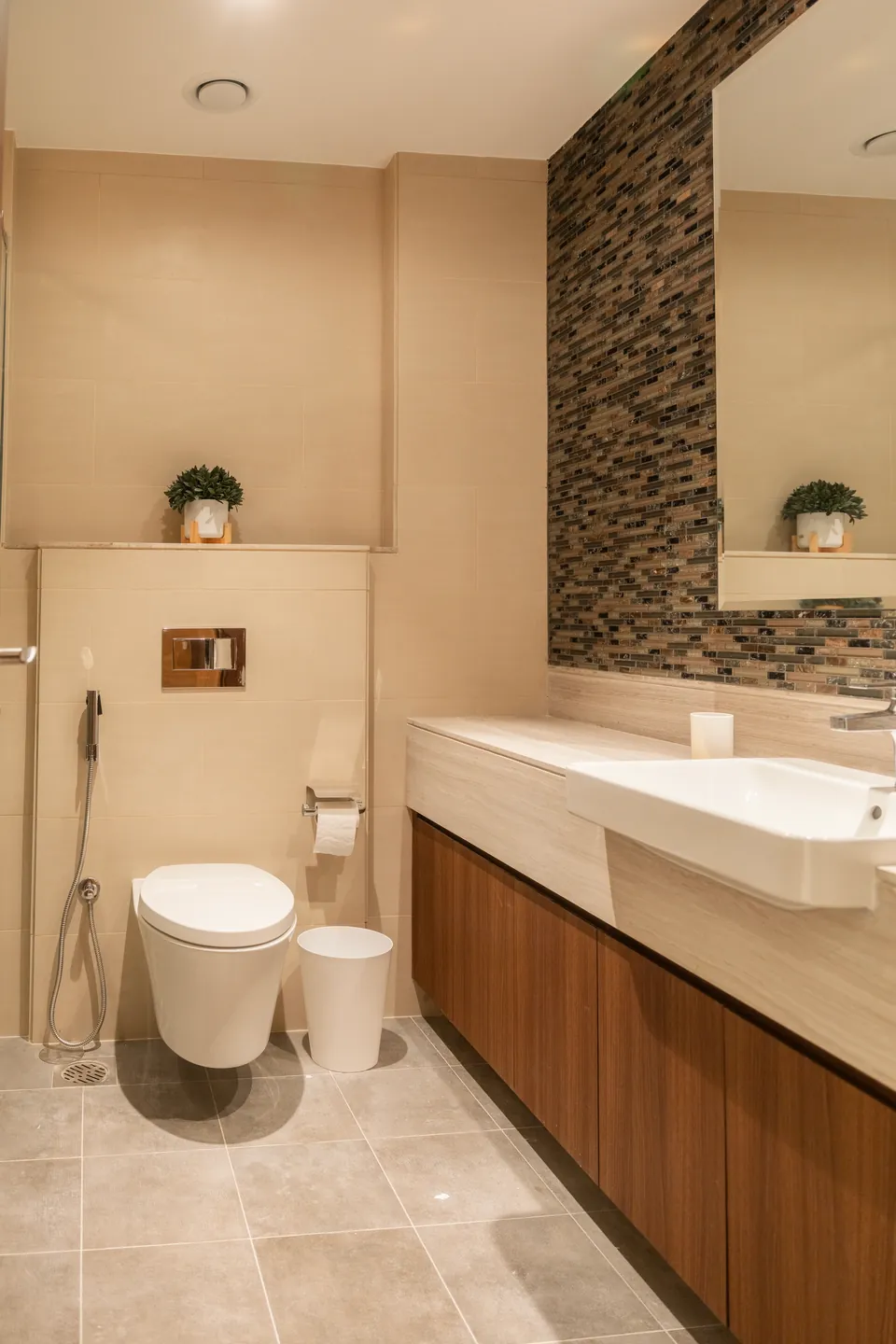
Porcelain is fired at high temperature and absorbs very little water, so it resists staining and suits bathrooms, kitchens, terraces and pool surrounds. Many ranges imitate marble, travertine, concrete or timber closely, and for a household that wants the look of marble without the etching, a stone-look porcelain is often the sensible answer.
Large-format tiles and thin slabs reduce grout lines and give the calm, continuous floors many owners want. They are less forgiving to lay. The base must be very flat, each tile needs full adhesive contact, and movement joints have to be planned, because a floor that warms in the sun and cools under air conditioning expands and contracts. We draw these details and check them on site rather than leaving them to chance.
Outside, choose a finish rated for slip resistance in the wet, and bear in mind that dark tiles in direct sun can become too hot for bare feet. Clean porcelain with a neutral cleaner, and seal cement grout in showers and around kitchen worktops. Our bathroom design page looks at wet rooms as a whole.
Timber and engineered flooring
Wood takes up moisture from humid air and gives it back in dry air, swelling and shrinking as it does. In a home that swings between a closed, humid summer house and a cool, air-conditioned one, solid boards can cup, open up at the joints or lift.
Engineered flooring, a real timber wear layer bonded to a stable layered core, moves far less and is our usual recommendation for villas and apartments here. Boards should acclimatise in the cooled room before fitting, the screed must be dry, and expansion gaps are left at walls and thresholds. We keep timber out of bathrooms and away from doors that open straight onto a pool deck.
Sunlight changes the colour of wood, lightening dark species and deepening pale ones, so a rug moved after a year can leave an outline. Oiled finishes can be repaired locally, while lacquered finishes resist wear but need sanding to renew. Grit is the real enemy, so entrance mats and felt pads under furniture do more than any cleaning product.
Outdoors we use dense hardwoods or composite decking suited to strong sun. Untreated hardwood weathers to a silver grey unless it is oiled regularly.
Joinery boards and finishes
Kitchens, wardrobes, vanities and wall panelling are normally made from engineered boards rather than solid timber, because boards stay flat and stable in cooled rooms. Standard MDF suits dry rooms, while moisture-resistant MDF or marine plywood is used in kitchens, bathrooms and anywhere near water. How the edges are sealed matters as much as the board itself, since water enters through bare cut edges and around sink cutouts.
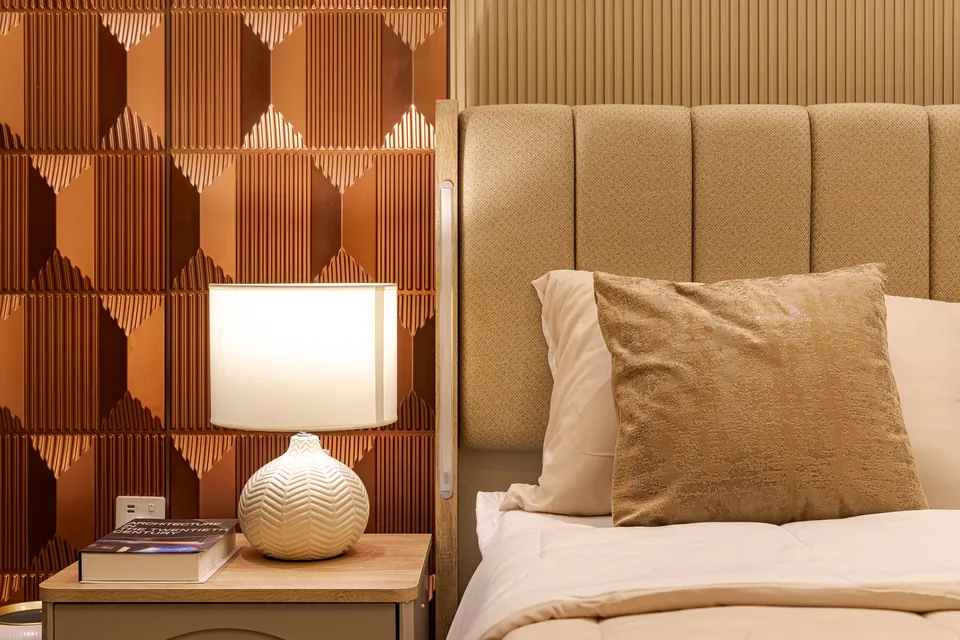
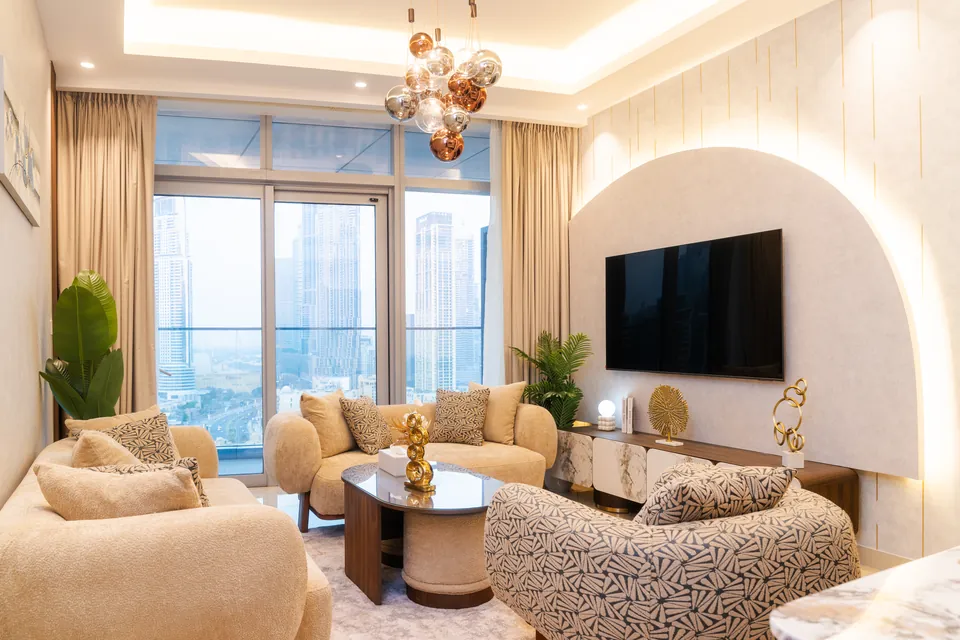
Wardrobes on outside walls and cupboards built around air conditioning units can gather condensation, so we leave ventilation gaps behind them and keep them clear of cold surfaces. At Imperial Avenue Apartment in Downtown Dubai, textured accent walls and soft bouclé carry much of the warmth of a mild, neutral palette.
- Timber veneer
- A thin slice of real wood on a stable board
- Veneer gives the grain of solid timber with far less movement, and book-matched sheets let the figure flow across a whole wall. It is still wood, so it darkens or pales in direct sun. UV-resistant lacquers slow the change, and blinds slow it further.
- Lacquer
- Coloured or clear, from matt to high gloss
- Lacquer gives an even colour in any shade. High gloss reflects light beautifully but shows fingerprints and fine scratches, while matt and satin hide them better. Chips can be repaired, though matching an aged colour takes skill. Clean with a soft damp cloth and never an abrasive pad.
- Laminate
- High-pressure laminate and similar surfaces
- Laminates are hard-wearing, water resistant on the face and easy to wipe down, which suits children's rooms, laundry rooms and cabinet interiors. Current ranges include convincing timber and stone designs, although edges and joints are where they give themselves away.
Paint and wall finishes for cooled, humid interiors
Paint in a Dubai home has two jobs. It has to look right in bright daylight and under warm evening lighting, and it has to cope with moisture wherever cooled rooms meet humid air. Bathrooms, kitchens, laundry rooms and staff quarters call for moisture resistant, mould resistant paint in a washable sheen.
Watch for the signs of condensation: dark spots on ceilings around air conditioning diffusers, or on outside walls behind wardrobes and sofas. The cause is usually cold air or an under-insulated duct meeting warm, damp air, so we correct the air conditioning detail rather than simply repainting over the marks.
Matt paint hides imperfections in the plaster but marks more easily, while eggshell and satin wipe clean and suit hallways and family rooms. Low-VOC paints are worth choosing for bedrooms in a home that stays closed and cooled for most of the year. Mineral finishes such as lime plaster and microcement add texture, but they need the right sealer in wet areas and a sound base to avoid cracking.
On exterior walls, paint needs strong UV resistance and enough flexibility to move with the heat. Pale colours keep walls cooler and show fading less.
Fabrics, leather and sun fade
Sunlight is the quickest way to age a room. Natural fibres such as silk, linen and cotton fade and weaken in the sun, silk fastest of all, and deep saturated colours show the change sooner than pale ones. Leather dries out under constant air conditioning and in direct light, so it needs conditioning.
Bouclé, velvet and textured weaves feel generous indoors, but a pale bouclé sofa in a family room needs either a removable cover or a performance version of the fabric. These habits keep upholstery and curtains looking fresh for longer.
- Line curtains, and add sheers or blinds that filter the brightest hours
- Consider UV-filtering film on large sunny windows where it suits the view
- Choose performance fabrics or solution-dyed synthetics for sunny rooms and terraces
- Rotate cushions and turn seat cushions so wear and fading stay even
- Keep leather out of direct sun and condition it periodically
- Vacuum upholstery often, since fine sand abrades the fibres
- Store outdoor cushions out of the sun when they are not in use
Brass, gold tones and other metals
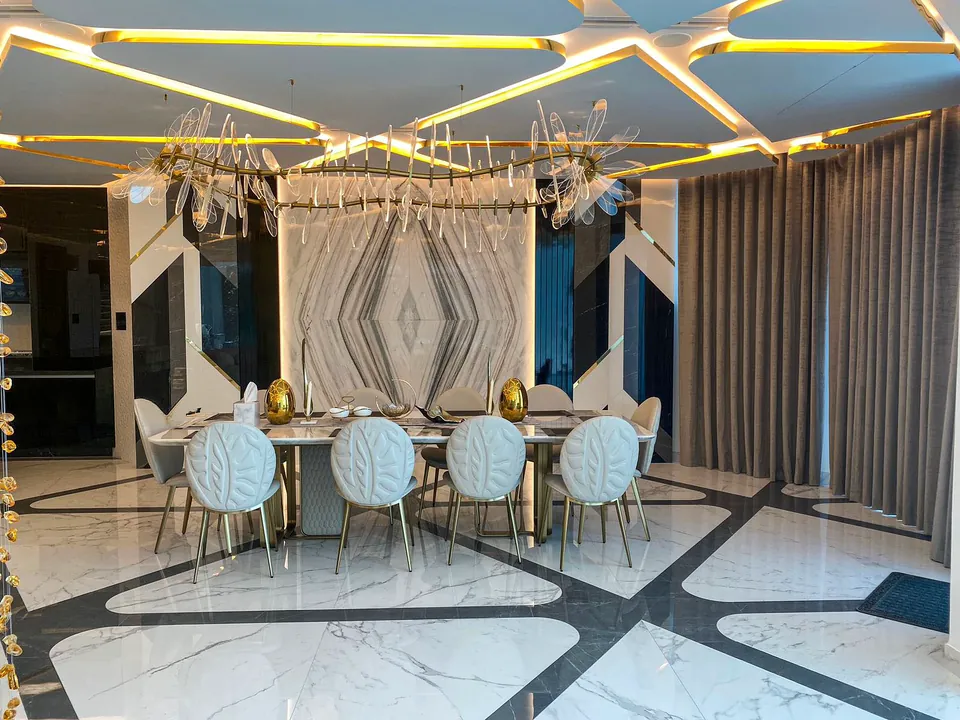
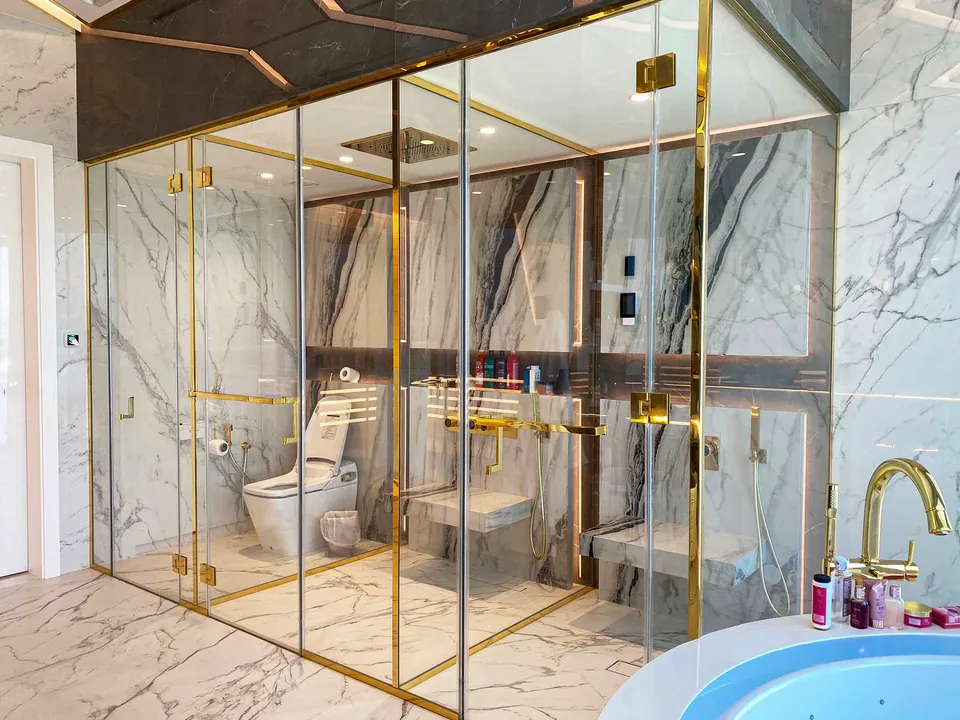
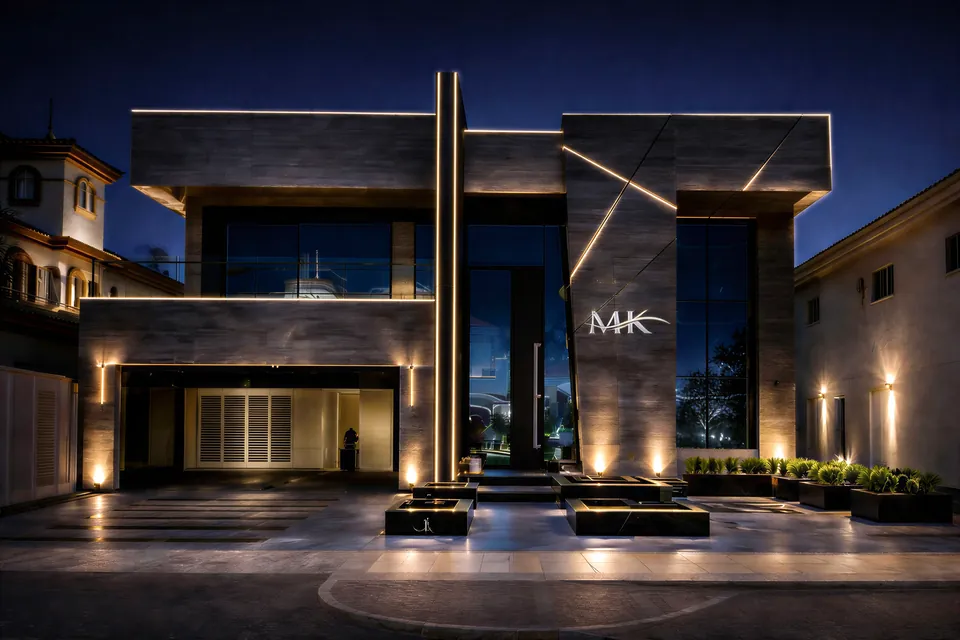
Metal accents run through many Dubai interiors, from brass strips inlaid in stone floors to gold-toned taps and framed shower screens. How they age depends on the finish, and homes on Palm Jumeirah and along the coast also have salt in the air to contend with. At MK Villa on Palm Jumeirah, golden accents and high-gloss finishes appear throughout the interiors, and on a coastal plot the metal finish and its care deserve as much thought as its colour.
- Unlacquered brass
- A living finish
- Bare solid brass darkens and develops a patina, faster in humid or coastal air and wherever hands touch it. Some owners love that character, others polish it back. Either way it is a choice to make knowingly.
- Lacquered brass
- Sealed to hold its colour
- A clear lacquer keeps the fresh colour for longer, but once scratched, the metal tarnishes unevenly beneath it, so abrasive cleaners are best avoided.
- PVD coated finishes
- Gold, bronze and black tones on steel or brass
- Physical vapour deposition bonds a thin, hard coloured layer to the metal. It resists tarnish and wear well on taps and handles, cleans with water and mild soap, and should never meet scouring pads or harsh chemicals.
- Stainless steel
- Kitchens, outdoor kitchens and fixings
- Near the sea, salt can mark lower grades of stainless steel with rust spots. For terraces, balustrades and outdoor kitchens on the coast we specify marine-grade stainless steel and suggest a rinse with fresh water now and then.
Glass for showers, balustrades and windows
Glass inside a home is chosen for safety first. Shower screens and glass doors use toughened safety glass, which breaks into small blunt pieces, and balustrades and overhead glazing typically use laminated glass, which holds together if it cracks. Fluted, frosted and tinted glass bring privacy between rooms without blocking the light.
In showers, water leaves mineral spots and soap film that build up quickly on clear glass. A squeegee after each shower prevents most of it, and a factory-applied easy-clean coating helps further. Avoid abrasive powders, which scratch the surface for good.
For windows, solar control and low-emissivity glazing reduce the heat and glare reaching the room, which eases the load on the air conditioning and protects fabrics and floors. On a renovation it is worth discussing before new furniture is chosen for a sun-facing room.
Choosing finishes on a real project
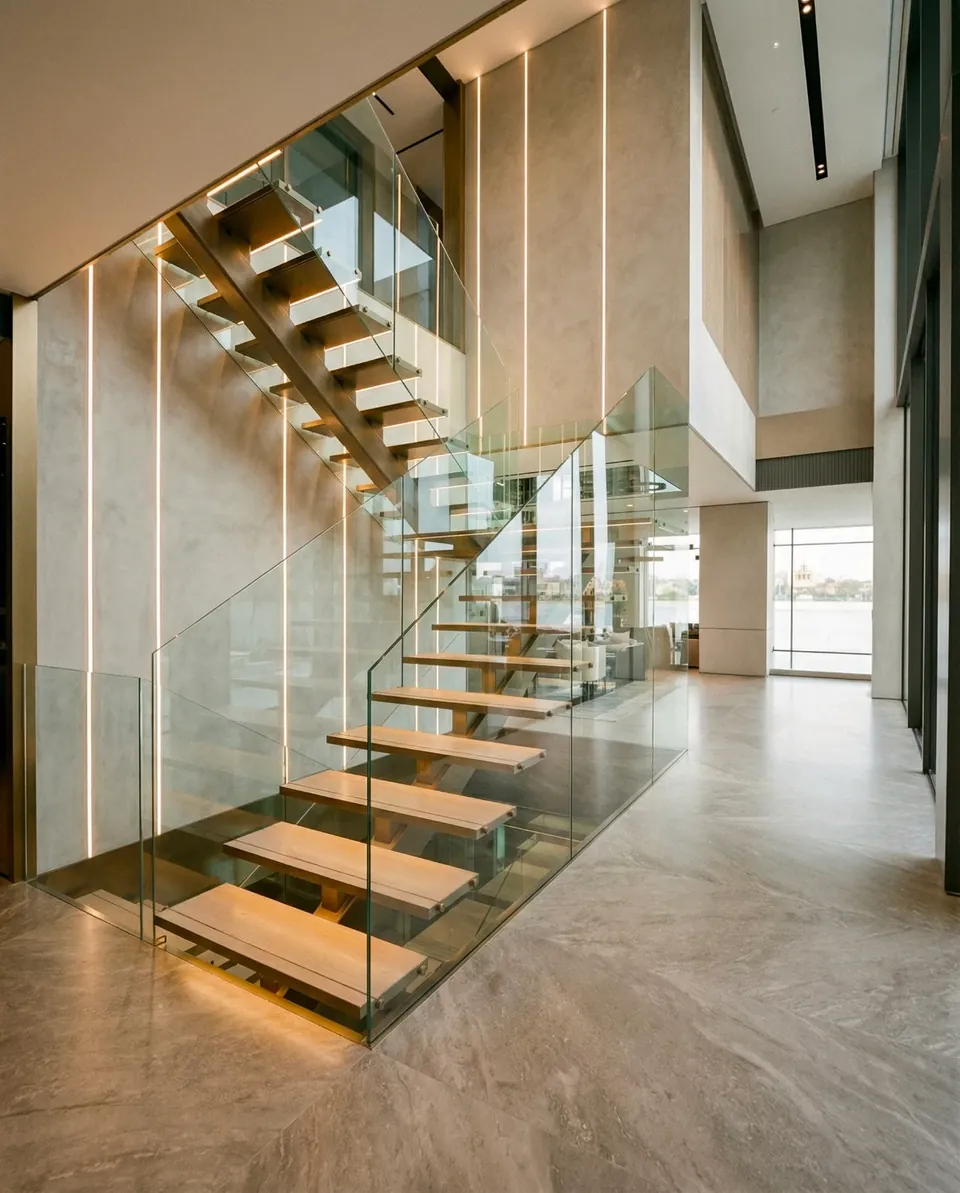
On our projects, finishes are agreed as a family rather than one at a time. The mood board sets the palette, the renders show the finishes together in the room, and physical samples are then checked in your own light, because stone, timber and fabric look different at noon, at sunset and under warm lamps. Our 3D visualisation stage is where these combinations are tested.
Material choice is also one of the main cost drivers, alongside the size of the property and the extent of joinery. Large natural stone slabs, extensive veneer and bespoke metalwork add cost, while porcelain, laminate and standard board sizes can hold it down in rooms where they suit the use. If you are planning a larger project, our villa renovation page explains how the work is packaged, and you can send us the details through our estimate page.
Guides from the studio
Our Work
Related Projects
FAQ
Materials and Finishes for Dubai Homes: Questions Answered
Clarity brings comfort. Discover answers to what others have asked, or reach out if yours is still unanswered.
Is marble a good choice for a kitchen in Dubai?
Yes, provided you are comfortable with a surface that etches and marks as it is used. Honed marble hides this better than polished. If you want a stone look with less care, granite or a stone-look porcelain is more forgiving, and quartz works well indoors away from strong sun and hot pans.
Can we have wooden floors in a Dubai villa?
Yes. Engineered timber stays far more stable than solid boards under air conditioning and summer humidity. It should acclimatise before it is fitted, and it is best kept out of bathrooms and away from pool doors.
Why do dark spots appear on ceilings near the air conditioning?
Usually condensation, where cold air or a cold duct meets warm, damp air. Repainting alone rarely solves it. The insulation and the air conditioning detail need checking first, and then the ceiling can be treated and repainted.
Should we leave the air conditioning on when we travel in summer?
It is usually wise to keep some cooling or dehumidification running while the home is empty. A closed house without it can become humid enough for mould to start on walls, fabrics and inside wardrobes, and timber may move. Ask whoever maintains your system which setting suits it.
How do we stop curtains and sofas from fading?
Line the curtains, filter the brightest sun with sheers, blinds or UV-filtering film, choose performance or solution-dyed fabrics for sunny rooms, and rotate cushions. Silk and strongly saturated colours fade fastest.
Will gold-toned taps and handles tarnish?
It depends on the finish. PVD coatings resist tarnish well if cleaned gently, lacquered brass holds its colour until the lacquer is scratched, and unlacquered brass is meant to darken over time. Near the sea, wiping metal fittings with a soft damp cloth keeps salt from building up.
Choosing finishes for your home?
Tell us on WhatsApp or on +971 58 585 6265 which rooms you are planning and where the property is. By the next working day, an indicative estimate and a proposed timeline will be with you.