
Sustainable Interior Design in Dubai: A Practical Guide
Updated
Sustainable interior design in Dubai is less about labels and more about three practical things: reducing the heat load and energy use of your home, choosing materials that last instead of being replaced, and keeping indoor air healthy in rooms that are sealed and air conditioned for much of the year. Done well, it produces interiors that are more comfortable and less wasteful to run, without looking any less luxurious.
What sustainability means for an interior in Dubai
In a hot climate, a large part of a home's environmental impact comes from the energy spent cooling it, followed by the materials that are bought, used and thrown away over its life. An interior designer cannot change a building's orientation, but can influence a great deal: how much sun heats the rooms, how efficiently they are lit and cooled, how long the finishes last and what ends up in landfill.
A useful test for any decision is simple: will this still be working and looking right in many years, and what happens to it at the end?
Where it fits in the design process
Sustainability works best as part of the brief rather than a late addition. At the planning stage it shapes the layout, for example putting rooms used mainly in the afternoon away from the hottest elevations, or grouping wet areas to shorten pipe runs. In the construction documents it becomes specification: which boards, paints, adhesives and fittings are acceptable. During furniture, fixtures and equipment selection it guides what is kept, refurbished or bought new. Raising it at the end usually means paying for changes; raising it at the start is far easier to accommodate.
Controlling heat and sun
Large windows and glass façades are part of the appeal of many Dubai homes, and also a major source of heat gain.
- Window treatments. Lined curtains and well-fitted blinds reduce heat before it spreads through the room. Motorised blinds can be set to close automatically on west-facing rooms in the afternoon.
- Glazing film. Solar control film can reduce heat and glare through existing windows. Check with building management first, because many towers control the external appearance of their façades.
- Shade outdoors. In villas, pergolas, canopies and planting shade terraces and the walls and windows behind them.
- Sealing and insulation. During a renovation, gaps around windows and doors and poorly insulated ducting are unglamorous but worth fixing.
For villa gardens and terraces, shade and planting choices are part of our exterior and landscape design work.
Efficient cooling and lighting
Cooling
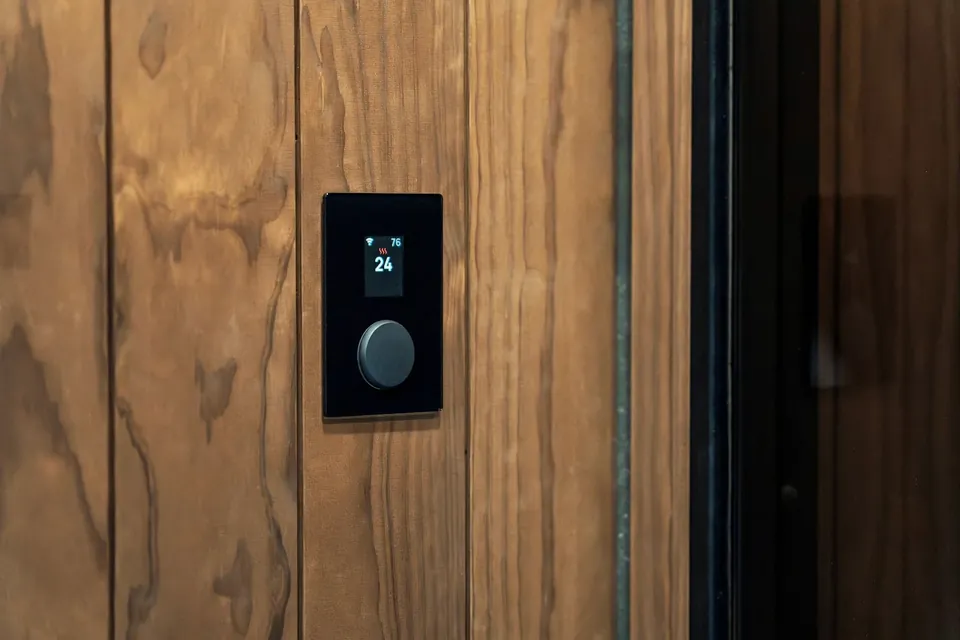
Interiors affect how well air conditioning works. Tall furniture placed in front of return grilles, ceilings with no access to fan coil units and rooms that cannot be controlled separately all waste energy. During a renovation, zoning the home so unused rooms can be set back, servicing the existing units and adding smart thermostats are practical steps. Ceiling fans can make a room feel cooler at a higher thermostat setting.
Lighting
LED lighting is now the norm, but design still matters. Layered circuits, dimming, and presence sensors in utility areas and corridors mean less light is used when nobody needs it. Warm, good-quality LED light can look every bit as rich as older halogen schemes. Our lighting design guide covers this in detail, and our guide to smart home automation explains how schedules and scenes for lighting, blinds and cooling work together.
Materials that last longer and waste less
The most sustainable material is often the one you will never need to replace. Durable, repairable choices outperform fashionable finishes with a short life.
- Natural stone and quality porcelain for floors that last the life of the interior.
- Solid timber and good veneers from responsibly managed forests; ask suppliers for chain-of-custody certification such as FSC.
- Engineered boards with low formaldehyde emissions for joinery and furniture carcasses.
- Refurbishment before replacement. Reupholstering or refinishing good existing furniture keeps it in use and often keeps character a new piece lacks.
- A timeless base palette that can be refreshed with textiles and accessories, instead of a full refit whenever trends move.
Consider where things are made, too. Locally made joinery and furniture reduce shipping, and they are easier to repair, adjust or extend later.
Healthier indoor air
Dubai homes are closed up and air conditioned for much of the year, so whatever is inside them is what you breathe. Paints, adhesives, sealants and some board materials release volatile organic compounds, especially when new.
- Specify low-VOC paints, adhesives and finishes.
- Let new finishes air out before moving back in.
- Keep fresh-air ventilation and extract fans working, and clean AC filters and ducts regularly.
- Control humidity in bathrooms, kitchens and laundries to prevent mould.
- Choose washable soft furnishings, and rugs that can be properly cleaned.
Water and waste
Water-efficient taps, shower heads and dual-flush cisterns reduce consumption, and when they are chosen carefully you will not notice the difference in use. In villas, irrigation planning for the garden often has more effect than any fitting indoors.
On site, waste falls when the design works to standard board and tile sizes, materials are ordered accurately and items you are keeping are properly protected. Fittings and furniture that come out during a renovation can often be reused, sold or donated rather than sent straight to a skip.
How sustainability affects the budget
Sustainable choices tend to shift costs rather than simply add them. The main drivers are:
- Material grade: certified timber, low-VOC products and durable finishes.
- MEP works: cooling zones and controls, efficient fittings and lighting controls.
- Window treatments and shading: motorised blinds, glazing film and outdoor shade.
- Extent of bespoke joinery, which can be built to last and to be refinished.
- Size of the property and how much is being renovated at once.
Some items cost more on day one and less over the life of the home, through lower running costs and fewer replacements. We can tailor design and material selection to an approved budget, putting money first into the measures that do most for comfort.
Mistakes to avoid
- Treating sustainability as a label rather than a series of design decisions.
- Replacing sound furniture and finishes that could be refurbished.
- Fitting glazing film or outdoor shading without building or community approval.
- Boxing in AC units and grilles in ways that block airflow or maintenance access.
- Choosing cheap finishes that will need replacing soon, which is the least sustainable option of all.
Planning a more sustainable interior
At Xena Design & Build we consider these choices from concept through material specification and fit-out, whether the project is a villa, an apartment or an office. See our interior design services in Dubai, or contact us with your property details for an indicative estimate and proposed timeline within one working day.