
Landscape Design for Dubai Villas: Outdoor Living Guide
Updated
A villa landscape in Dubai works when it is designed for the climate first, because shade, surface heat, water use and maintenance decide how often you will actually use the garden. Plan the outdoor rooms you want, such as dining, lounging, a pool and play space, then choose structures, planting and materials that stay comfortable and look good through the hottest months.
Decide how you want to use the garden
Start with activities, not plants. List what you want to do outside and when you want to do it:
- morning coffee, family dinners or large gatherings;
- swimming, sunbathing and children's play;
- an outdoor kitchen or barbecue area;
- a quiet seating area or outdoor majlis;
- parking, service access and storage for pool equipment, tools and bins.
Then map those activities against sun and shade through the day. A dining terrace that takes the full afternoon sun will be unusable for much of the year without shade, while a seating area on the shaded side of the villa may become the most used part of the garden. Think about views from inside too, since you will look at the garden from the living room far more often than you sit in it during summer.
Shade and comfort come first
In Dubai, shade is the difference between a garden you look at and a garden you use. The main options each have trade-offs:
- Pergolas. Timber, aluminium or steel frames give defined outdoor rooms. Louvred aluminium roofs can open and close, and can include integrated lighting.
- Shade sails and canopies. Light and flexible, but fabrics degrade under strong UV and need replacing over time.
- Trees. Established trees give the most natural shade and cool the air around them, but they need space, irrigation and patience.
- Covered terraces. A solid roof extending from the villa gives full shade and makes room for ceiling fans, lighting and outdoor cooling.
Combine shade with air movement. Outdoor fans and misting systems both help, although misting adds moisture on already humid days and suits some spaces better than others.
Hardscape and materials that cope with heat
Paving and decking take the full force of the sun. Choose materials that stay comfortable underfoot and do not create glare.
- Light coloured natural stone and porcelain pavers stay cooler than dark surfaces. Use textured finishes around the pool for slip resistance.
- Timber decking looks warm but needs regular maintenance in strong sun. Composite decking needs less upkeep but can become hot, so check a sample in direct sun before you commit.
- Metal furniture and handrails can become too hot to touch. Powder coated aluminium, teak and outdoor rated weaves are more comfortable choices.
- Outdoor fabrics should be UV stable and quick drying, with cushions that can be stored away when not in use.
Drainage is easy to overlook in a dry climate, but heavy rain still needs somewhere to go, and pool decks and irrigated beds need proper falls and drains.
Planting and irrigation
Plant choice should follow the heat, the soil and how much water you are prepared to use. Heat and drought tolerant species, native and well adapted plants, and a modest lawn area all reduce water use and maintenance. Coastal plots, such as those on Palm Jumeirah, also have to cope with salt and wind.
- Use drip irrigation for beds and planters, and sprinklers only where lawn needs them.
- Put irrigation on a controller, with separate zones for sunny and shaded areas.
- Group plants by water need so no area is over or under watered.
- Consider artificial grass for play areas where real lawn would struggle, while accepting that it gets hot in direct sun.
Planting is also a privacy tool. Hedges, screening plants and tall planters can soften boundary walls and screen neighbouring windows without adding new structures.
Pools, water features and outdoor lighting
A pool is often the centrepiece. Decide early on its shape and depth and on features such as an infinity edge, a shallow sun ledge or an integrated spa, because they affect structure, the position of the plant room and the budget. Pool water can become very warm in summer, so some owners also consider cooling equipment.
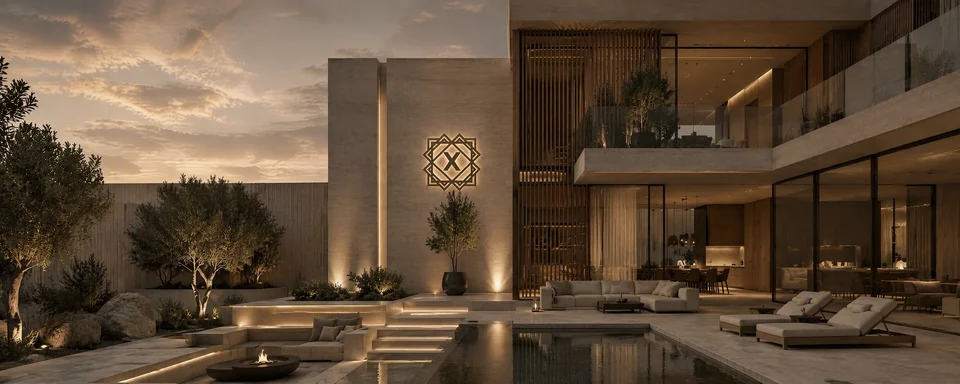
Water features add sound and movement. At Jumeirah Villa 23, the pool, landscaped garden and water features connect directly to the living and dining spaces, and at MK Villa on Palm Jumeirah, a custom designed infinity pool is integrated with the architecture and landscape.
Outdoor lighting extends the garden into the evening, when it is often at its most comfortable. Layer path lights, uplighting on trees and walls, underwater pool lighting and soft light over seating areas. Keep fittings low glare and choose products rated for outdoor and wet locations.
Approvals and community rules
Exterior works usually attract more scrutiny than interiors because they change how the villa looks from outside. Pools, pergolas, boundary walls, extensions and changes to the facade may need approval, and what applies depends on your community. It may involve the master developer and the relevant authority. Communities also set their own rules on working hours, site access and contractor conduct, and these vary.
We handle authority submissions and NOCs as part of the programme, including drawings and compliance sign-off. Our page on authority approvals in Dubai explains how that fits into a villa project.
Budget drivers and common mistakes
What drives the cost
- the size of the garden and how much of it is being redone;
- structural works, such as pools, pergolas, retaining walls and outdoor kitchens;
- MEP works, including power, lighting, irrigation, pool equipment and outdoor cooling;
- the grade of materials for paving, decking and cladding;
- custom fabrication, such as bespoke pergolas, screens or water features;
- the outdoor furniture specification;
- the size of plants at installation, since established trees give shade sooner but cost more than young stock.
Mistakes to avoid
- Designing the garden around the cooler months and forgetting summer.
- Choosing dark paving that becomes too hot to walk on.
- Planting that needs more water and care than you want to provide.
- Forgetting power, water and drainage points before paving is laid.
- Leaving outdoor lighting until the end, when cables have to be cut into finished surfaces.
How the work is sequenced
- Brief, survey and concept. Including a study of sun and shade across the plot.
- 3D visualisation. Detailed renders of the outdoor spaces, so you can see the design before work begins.
- Drawings and approvals. Working drawings, specifications and submissions.
- Groundworks and structure. Excavation, drainage, the pool shell, walls and pergola foundations.
- MEP. Power, irrigation, lighting and pool equipment.
- Hardscape. Paving, decking and cladding.
- Softscape and finishing. Planting and turf, then furniture, lighting and final detailing.
Outdoor work is noisy and involves moving heavy materials past your neighbours, so plan it around your community's working hours and access rules.
Plan your outdoor space with us
At Xena Design & Build, exterior and landscape design is part of our villa turnkey scope, so the garden can be planned alongside the interiors rather than as an afterthought. See our exterior and landscape design service, then contact us with your villa's location, size and vision for an indicative estimate and proposed timeline within one working day.