
Hotel Interior Design Lessons for Luxury Homes in Dubai
Updated
The hotel ideas that translate best to a Dubai home are the practical ones: a clear arrival sequence, bedrooms planned as suites, bathrooms that work like a spa, lighting controlled in scenes and service areas kept out of sight. Borrow the planning discipline behind a good hotel, then make the finishes, art and objects personal so the house never feels like a lobby.
What hotels do well, and what to leave behind
A well-run luxury hotel feels effortless because every detail has been planned for how guests actually behave: where they put a bag, how they find the light switch at night, where the staff come and go unseen. That planning discipline is the useful part for a home.
What does not translate is the anonymity. Hotels are designed to please a constant stream of different guests, so they avoid anything too personal. A home should do the opposite. The aim is hotel-level comfort and function with your own collections, colours and family life in plain view.
Designing a stronger arrival
Hotels think carefully about the first minute: the approach, the door, the first view inside and where you set things down. In a villa, the same sequence starts at the gate and driveway and continues through the entrance hall.
- A clear first view: plan a focal point on axis with the front door, such as a staircase, artwork, a console or a view through to the garden.
- Somewhere to land: a console or bench for keys and bags, concealed shoe and coat storage, and a guest cloakroom close by.
- Controlled light: a welcome lighting scene that switches on the hall, stairs and main living area together.
- A durable threshold: sand and dust arrive with every visitor in Dubai, so choose hard, easily cleaned flooring and a recessed mat at the door.
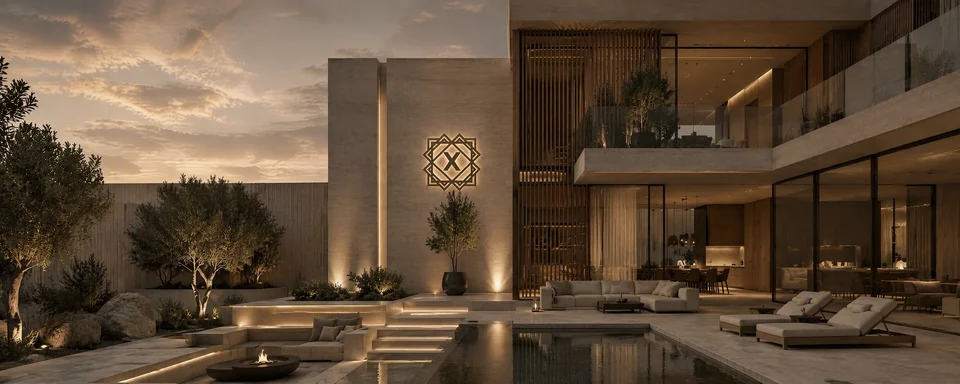
Our MK Villa on Palm Jumeirah was designed around a grand entrance with a spacious car garage, planned to create a strong first impression from the moment of arrival.
Bedrooms planned as suites
A hotel suite separates sleeping, dressing and bathing so each can be done without disturbing the other. Many Dubai villas have the floor area to do the same in the principal bedroom and guest rooms.
- A dressing area or walk-in wardrobe between bedroom and bathroom, with good light and a full-length mirror.
- Blackout curtains or blinds on motorised tracks, with a sheer layer for daytime privacy against the strong sun.
- Bedside controls for the main lights, curtains and air conditioning, with one button to switch everything off.
- Low-level night lighting to the bathroom so nobody needs the main lights at night.
- Sockets and charging points where you actually use devices, beside the bed and at a desk or dressing table.
Guest suites deserve the same treatment. When family and friends come to stay, a self-contained guest room with its own bathroom and storage makes visitors comfortable and keeps the household running normally.
Bathrooms that work like a spa
Hotel bathrooms feel generous because they are planned carefully, not only because they are large. A walk-in shower with a linear drain, a separate WC compartment, a double vanity with drawers rather than open shelves and a niche for toiletries all make a room work better.
Lighting at the mirror is the detail many homes get wrong. Light from either side of the face, or from a lit mirror, is far more flattering and useful than a downlight overhead. Add a dimmable scene for evening baths.
Dubai's humidity makes ventilation essential. Specify a properly sized extract fan, choose finishes suited to wet areas and detail waterproofing carefully under showers and around baths. Porous natural stones need sealing and regular care; porcelain and sintered surfaces are lower maintenance alternatives with a similar look.
Lighting, acoustics and tactile materials
Hotels rarely rely on one ceiling light. They combine indirect light, lamps, wall lights and accent light on artwork, then control it all through a few simple scenes. The same approach makes a home feel warm and calm in the evening. Our guide to interior lighting design for Dubai homes explains how to layer it.
Two other hotel qualities are easy to overlook. The first is quiet: solid-core doors, soft furnishings, rugs and acoustic separation between bedrooms and living areas make a home far more restful. The second is touch: well-weighted door handles, upholstered headboards, good bed linen and natural materials such as timber, leather, linen and stone make a space feel expensive in a way photographs never capture.
Service zones and hidden functionality
The real secret of a luxury hotel is its back of house. Luggage, laundry, cleaning and deliveries move through routes guests never see. Larger Dubai villas often have household staff, drivers and regular deliveries, and the same thinking applies.
- A secondary entrance for deliveries and staff, linked to the kitchen and utility areas.
- A back kitchen or pantry for everyday cooking, keeping the show kitchen clean for entertaining.
- A laundry room with space to sort, dry and iron, and linen storage on each bedroom floor.
- Cleaning cupboards with power for charging equipment.
- Concealed storage throughout, built into bespoke joinery so surfaces stay clear.
Formal hosting spaces benefit from the same logic. A majlis or dining room works best when food and service can arrive from a separate route; our majlis design guide covers this in more detail.
How to keep the home personal
The usual mistake is copying a hotel look wholesale: the same neutral palette, the same hotel-lobby furniture, nothing of the owners visible. Instead, keep the planning ideas and personalise the finishes. Display art and objects you have collected, choose colours you love, and give children's rooms and family spaces the informality they need.
When we design a villa, we respect the owner's style first and bring the finishing touches together into one cohesive design, so the result feels considered without feeling impersonal.
Common mistakes when borrowing hotel design
- Choosing delicate hotel-style finishes without the maintenance team a hotel has.
- Oversized furniture that suits a lobby but crowds a living room.
- Glass-walled bathrooms in bedrooms that some family members or guests find uncomfortable.
- Too many identical downlights and not enough lamps and wall lights.
- Forgetting service routes, so staff and deliveries pass through the main living areas.
Planning the budget and sequencing the work
The cost of a hotel-inspired renovation depends on scope, and the drivers are the same as for any villa project: the size of the property, the extent of bespoke joinery, the grade of materials, MEP and structural works such as moving walls or adding bathrooms, and the furniture specification. Lighting control, motorised shading and acoustic upgrades add to the MEP scope.
Work usually runs in this order: brief and survey, space planning, concept design with 3D renders, construction drawings, approvals from the community or building management where needed, procurement, site works, then furnishing, snagging and handover. If you live in the villa during works, the project can be phased room by room with dust screening and agreed working hours.
To explore what this could look like in your home, see our villa interior design page, then share the location, size and your vision through the contact page. We will reply with an indicative estimate and proposed timeline within one working day.